
I’m back in New York after traveling through Southwest France and the Jura for a few weeks in February and March, doing research for future stories.
I ended the Southwest leg of my trip in Bordeaux. It was my first time visiting the city, and I spent a beautiful sunny Sunday playing tourist. I kind of forgot that it’s a university town, and so I was surprised at how young and energetic the city felt. I walked along the riverfront and stopped at the Chartrons market to slurp down freshly shucked oysters by the water. I sat outside a café in a large square and watched fellow patrons slowly shift their chairs with the changing light, like cats following a sunbeam. And, of course, I checked out some of the city’s wine bars. I loved dinner at Soif, a “restaurant with a wine list,” #notawinebar as the menu informed me (apparently you have to order food to be able to order wine).
And you would be missing out if you didn’t enjoy a meal there. Located in the heart of the Saint-Pierre district, it’s a warm, cozy space where Chef Cécile Lambré uses local seasonal produce to turn out classic, unfussy dishes. Small plates featured tempura enoki mushrooms and duck tartare, mains showcased lamb, duck, or fresh seafood, and dessert options included a brioche pain perdu with caramel and vinegar made from aged Banyuls. Lambré’s husband Nico Lefevre has assembled an impressive wine list of small, independent producers from across France and beyond, all working organically or biodynamically, with a lot of hard-to-find but attractively priced bottles. The highlight was tasting from a bottle of the 2004 “Totem” by Domaine du Pech, in the Buzet appellation east of Bordeaux, that Lefevre had opened for an event the day before.
I also enjoyed posting up at Cornichon, on the Quai Richelieu. It’s a bit more of a scene, good for groups, and situated just down the street from the Place de la Bourse, the city’s most iconic square. The wine list has plenty of deep cuts, especially from Bordeaux, Burgundy, and the Rhône. Grab a seat on the terrace to enjoy a view of the river and the people-watching.
In the Glass
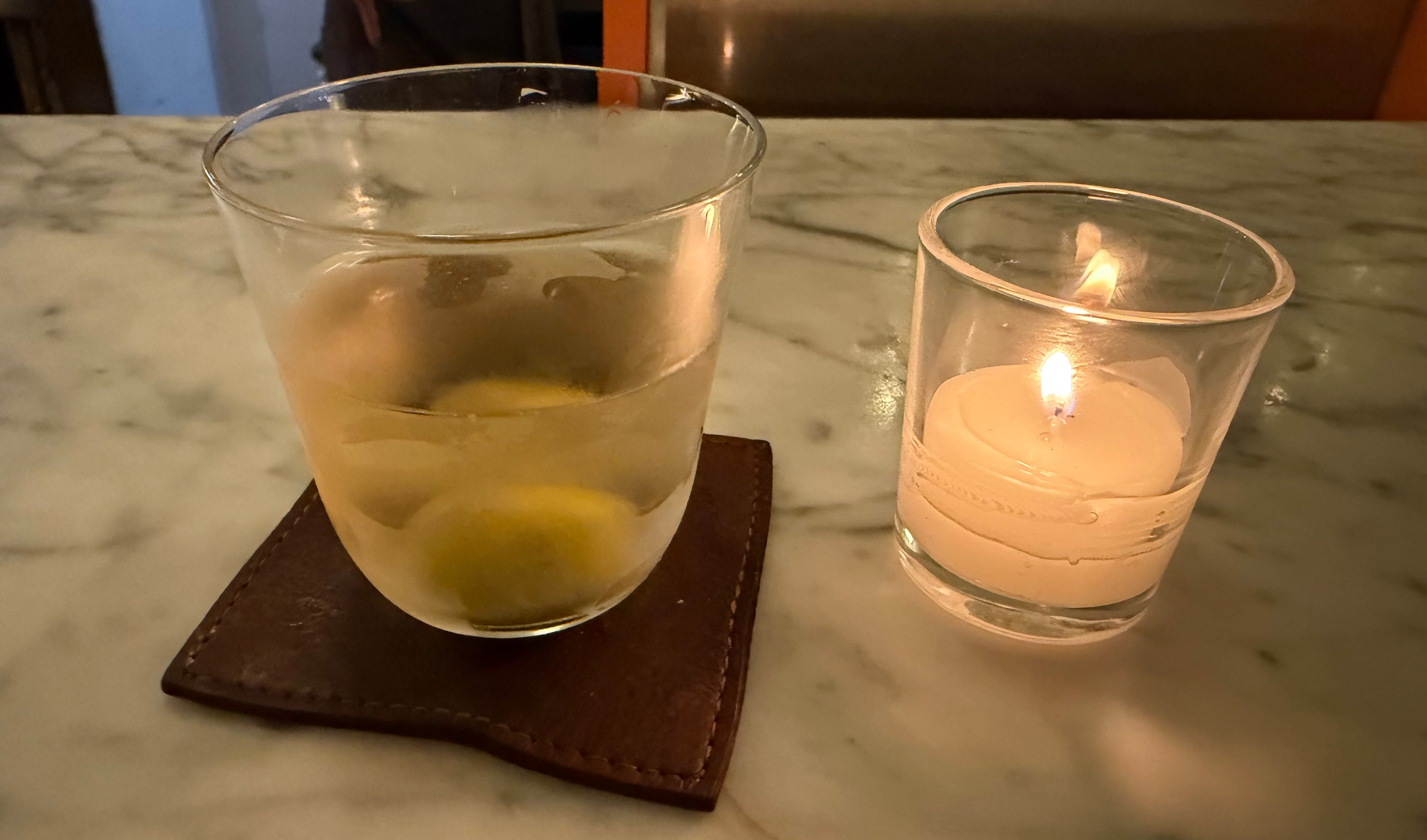
Now that I’m back in New York, I’ve been thinking about the House Martini at Place des Fêtes in Brooklyn. The drink’s star ingredient is a mindblowing tomato liqueur, the work of distiller, winemaker, and tomato obsessive Laurent Cazottes, who I met in February in Gaillac. (You can read about Cazottes and his incredible organic spirits in my latest piece for Everyday Drinking.) It brings incredible depth of flavor and complexity to the cocktail; it’s savory, salty, and disappears dangerously fast, leaving a plump Gordal olive rolling around the bottom of the glass.
Kenny Toll, sommelier at Place des Fêtes’s sister restaurant Cafe Mado, shared the recipe with me. Store your vodka in the freezer and chill all the other ingredients in the fridge for a few hours before making.
Place des Fêtes House Martini
1 ½ ounces of vodka
½ ounce of Laurent Cazottes Tomates liqueur
½ ounce of Equipo Navazos La Bota de Vermut Blanco 133
1 ounce of Vichy Catalan mineral water (the salinity is important!)
¼ ounce of manzanilla sherry
Add the vodka, tomato liqueur, vermouth, mineral water, and sherry to a mixing glass. Stir to combine. Pour into a chilled glass and garnish with a Gordal olive.

Odds & Ends
Balera, a new Italian restaurant in Williamsburg, opened last Thursday. I sat down with wine director Oliviero Lucchetti, formerly of Chambers, to talk about the wine program. I’ll share that conversation soon.
Currently Reading
Tell Me How You Eat: Food, Power, and the Will to Live, by Amber Husain. I’m reading this as part of Alicia Kennedy’s Desk Salon Series. It’s about Husain’s experience with anorexia, but this is definitely not a traditional memoir about eating disorders. Husain dissects the political dimensions of her refusal to eat and of the connections between food and political empowerment throughout history. (ICYMI, Kennedy launched her magazine Tomato Tomato last week.)


Tasting Notebook
Before I left for France in February, I went to a tasting of Pierre Gonon wines at Freddy’s Tribeca, organized by Chambers Street Wines and led by Jean Gonon, who took over the family domaine with his brother Pierre in 1989. Gonon is the benchmark for Saint-Joseph in the Northern Rhône: all massale selection vines, organic grapegrowing and careful winemaking with minimal extractions and neutral oak, letting the vintage and terroir speak. The purity of fruit in these wines is stunning. Gonon poured six wines for the tasting. Some highlights:
2022 Pierre Gonon “Les Oliviers” Saint-Joseph Blanc
Co-fermented marsanne—roughly 80 percent—and roussanne. Gonon said that these wines need at least 10 years of age in bottle to “lose the fat” and develop minerality, but this is already lighter and leaner compared to other Saint-Joseph whites (compliment!). Good tension, notes of lemon zest, ginger, honeysuckle, golden apple, white peach, toasted almond, with a stoniness on the palate.
2023 and 2022 Pierre Gonon “Les Iles Feray” Ardèche Rouge IGP
This blend includes young syrah vines from Saint-Joseph and from the plain outside the appellation. Gonon explained that late heat in the growing season restrained sugar accumulation—the alcohol is only 12.6 percent. Made with about 50 percent whole cluster, 50 percent destemmed. It’s ripe, generous, but fresh, with floral and herbal notes from those whole clusters. The 2022 vintage was drier and hotter, but more consistent. It’s more red-fruited and energetic than the 2023.
2023 Pierre Gonon Saint-Joseph Rouge
A blend of fruit from three different villages. About half of the blend comes from Tournon, on what Gonon calls “classic Saint-Joseph terroir,” with the remainder from Mauve and Saint-Jean-de-Muzols. Blending the sites is the classic approach in the Rhône; Gonon noted, “in a blend it’s more difficult to show everything from the different sites.” Olive tapenade, barbecue ribs, mushroom, black—almost blue—fruits. It’s all beautifully balanced: refreshing acidity, structured and well-managed tannins, impressive depth and complexity of fruit.
Gonon also poured a taste of the 2017 Pierre Gonon Saint-Joseph Rouge, which is in a fantastic place right now. Rich, dense fruit with all those delicious savory notes: violets, bay leaves and black olives, smoky peppery bacon, dark and juicy berries, all wound around firm tannins. Very classic, very syrah, very Gonon.
Pierre Gonon🙏🙏